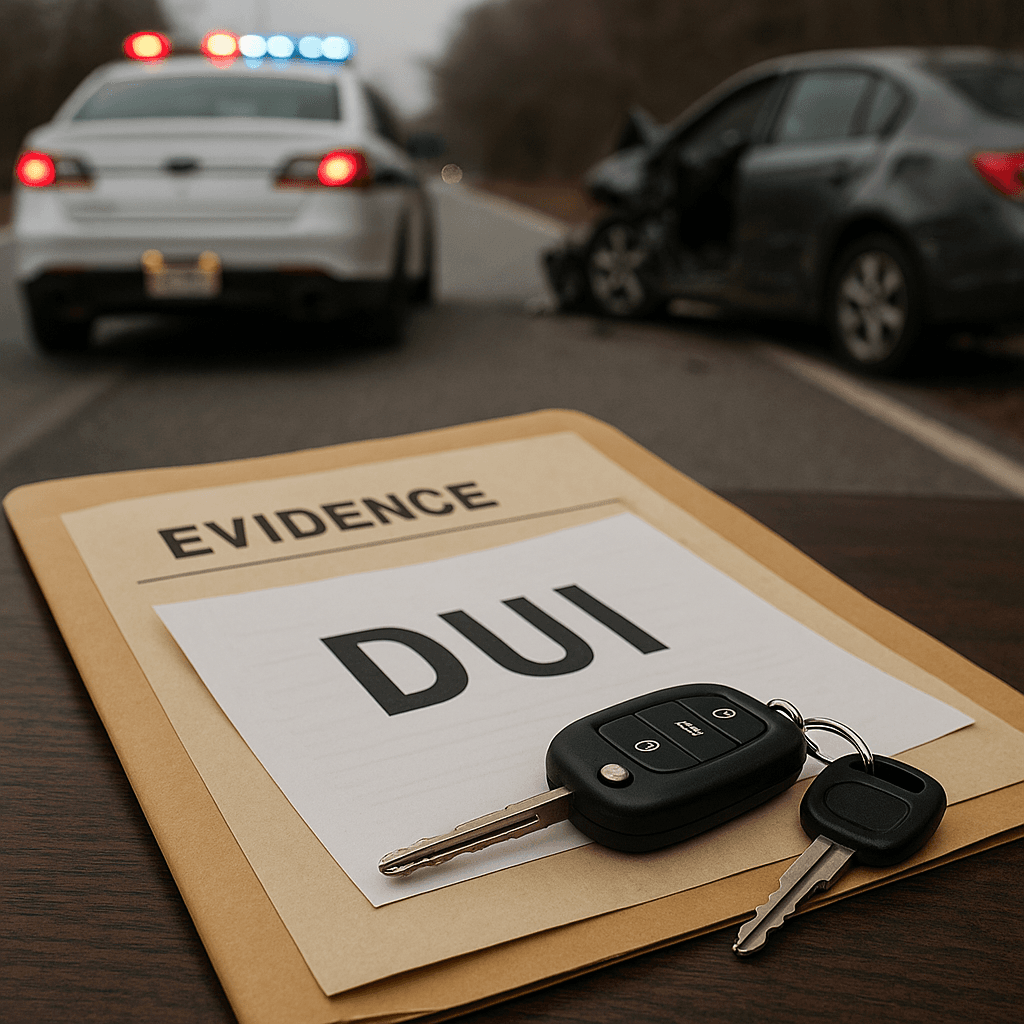
A fatal crash in which the driver was clearly at fault does not guarantee a vehicular homicide conviction. A York County, Pennsylvania jury showed exactly that in 2025.
According to reporting from the York Dispatch, jurors found Timothy McNamer, 21, not guilty of homicide by vehicle at the end of a three-day trial, with the verdict returned in late September 2025. He was convicted only of summary offenses: careless driving causing an unintentional death, speeding, and a lane violation. The charges arose from an August 2023 head-on crash in Hopewell Township that killed Matthew Thompson, 55, a local lacrosse coach.
One detail matters before anyone reads too much into it: that case did not involve a DUI charge. It is useful here for a narrower reason. It shows that a death, a clearly faulting driver, and a sympathetic victim do not automatically add up to a homicide conviction. Jurors have to be convinced that the driver's conduct legally caused the death, not just that a tragedy happened and a driver made a mistake.
Now add alcohol to that picture. Many people assume that a blood alcohol concentration over the legal limit plus a fatality equals an automatic vehicular homicide conviction. The statutes and jury instructions in several states do not work that way.
Prosecutors Have to Prove Two Things, Not One
Pennsylvania's homicide by vehicle while driving under the influence statute, 75 Pa.C.S. § 3735, is built around a causation requirement. The Commonwealth has to prove that the defendant unintentionally caused another person's death as the result of a Section 3802 DUI violation, and that the defendant is convicted of that underlying DUI offense. The phrase "as the result of" is the entire fight. Impairment is one element. Causation is a separate element.
The stakes explain why prosecutors press these cases hard and why the defense fights the causation element so carefully. A first offense under Section 3735 is a second-degree felony carrying a mandatory minimum of three years of imprisonment per victim, and those minimums are served consecutively when there is more than one victim.
Why a Split Verdict Is Legally Coherent
If the causation element is truly independent of the intoxication finding, a jury should be able to split the difference. It can.
The defense firm Goldstein Mehta has analyzed a Pennsylvania Superior Court decision (reported by the firm as Commonwealth v. Kling) in which a jury acquitted the defendant of the impairment subsection of DUI under 75 Pa.C.S. § 3802(d)(2) but convicted on the per se DUI subsection and on homicide by vehicle while DUI. The court let that mixed result stand because the Commonwealth had separately proven causation through expert testimony and evidence of reckless conduct, described as racing to merge. The principle the firm draws from the case is the one that matters for both sides: the Commonwealth has to show that the DUI actually caused the death, and the mere presence of drugs or alcohol in a driver's system is not sufficient on its own. Defense readers should note that the firm's write-up is a secondary analysis, and the exact opinion citation should be confirmed against the official reporter before relying on the case name in any filing.
The takeaway is structural. A jury can decide that a driver was over the limit and still decide that the prosecution did not prove the impaired driving was what killed the other person. "Guilty of DUI, not guilty of homicide" is not a loophole. It tracks the elements the statute actually requires.
The Defense Playbook on Causation
Once causation is understood as a distinct element, the defense work becomes concrete. Common lines of attack include:
-
Attacking the causal chain. Was the collision caused by impairment, or by speed, road geometry, a sudden hazard, or a mechanical issue that a sober driver would also have faced? Expert accident reconstruction is often the center of gravity.
-
Intervening or superseding causes. An independent event between the driving conduct and the death may break the legal chain of causation.
-
Medical emergency. A driver who loses control because of a genuine medical event presents a different causation story than one whose impairment caused the loss of control.
-
Victim or third-party conduct. The conduct of the other driver or the person who died can be relevant to whether the defendant's driving was the proximate cause, within the limits each state's law sets.
What the Jury Instructions Actually Say
The jury charge is the battleground because it tells jurors how much the prosecution's intoxication evidence is allowed to do.
New Jersey's model jury charge for reckless vehicular homicide under N.J.S.A. 2C:11-5 is explicit. Evidence of intoxication shall create an inference that the defendant operated the vehicle recklessly. An inference is permission to find a fact, not a command. The charge still requires the State to prove that the reckless conduct was the proximate cause of death, and it recognizes that an intervening or superseding cause can break the chain. Intoxication alone does not establish recklessness or guilt as a matter of law.
Michigan applies a similar causation discipline. As the Barone Defense Firm explains in its analysis of Michigan proximate causation, the prosecution has to prove the death was a direct and natural result of the conduct, judged through foreseeability. A superseding intervening cause breaks the chain only if it is essentially the sole cause and is completely unforeseeable, described in the analysis as something like an act of God. Ordinary negligence by the victim or a third party does not break the chain, and more than one proximate cause can coexist. That last point cuts both ways: it limits some defense arguments while keeping the burden of proving causation squarely on the prosecution.
The Jurisdictional Patchwork
This is where readers should be careful. The causation-required framing described above is well grounded in Pennsylvania, New Jersey, and Michigan, but it is not uniform nationwide. There are unverified references to a contrary line of authority in Washington (sometimes cited as a State v. Morgan line) holding that causation between intoxication and death is not an element and that only the connection between the act of driving and the accident must be shown. We could not independently confirm that authority, and we are not stating it as settled law. It is included here only as a caution: the strength of a causation defense depends heavily on the specific statute and jury instructions in the state where the case is charged. What works in Harrisburg or Trenton may not map onto another jurisdiction.
The Bottom Line
For the defense, the "guilty of DUI, not guilty of homicide" outcome is a sound doctrinal target, not a gimmick. It exists because statutes like 75 Pa.C.S. § 3735 and instructions like New Jersey's reckless vehicular homicide charge treat causation as its own element that the government has to prove.
One honest caveat. We found no data showing this is a measurable 2026 trend or that acquittals of this kind are increasing in number. The accurate description is doctrinal, not statistical: the law has long allowed a jury to find a driver impaired while still finding that the prosecution did not prove the impairment caused the death. For prosecutors, that means a high BAC is the beginning of the case, not the end of it. For people facing these charges, it means the causation question deserves its own defense, built with counsel licensed in the charging state.
Related reading
Sources
-
York Dispatch, "Jury acquits York County driver of vehicular homicide at trial" (Sept. 30, 2025)
-
Goldstein Mehta LLC, analysis of a PA Superior Court homicide by vehicle while DUI decision (Commonwealth v. Kling)
-
75 Pa.C.S. § 3735, Homicide by vehicle while driving under the influence
-
New Jersey Model Jury Charge, Reckless Vehicular Homicide (N.J.S.A. 2C:11-5)
-
Barone Defense Firm, "What is Proximate Causation in a Michigan Drunk Driving Causing Death Case"
This article contains AI-assisted content and has been reviewed by our editorial team.
IMPORTANT NOTICE: GavelDaily.com is an advertising and information service, not a law firm. Submitting this form does not create an attorney-client relationship. The information you provide will be shared with licensed criminal defense attorneys in your area who may contact you about your inquiry. All submissions are treated as confidential by our service, but attorney-client privilege does not attach until you formally retain an attorney. Any attorney you connect with through this service is independently responsible for their legal advice and representation. Free consultations are subject to individual attorney availability. If you are facing an immediate legal emergency, contact your local public defender's office or call 911.