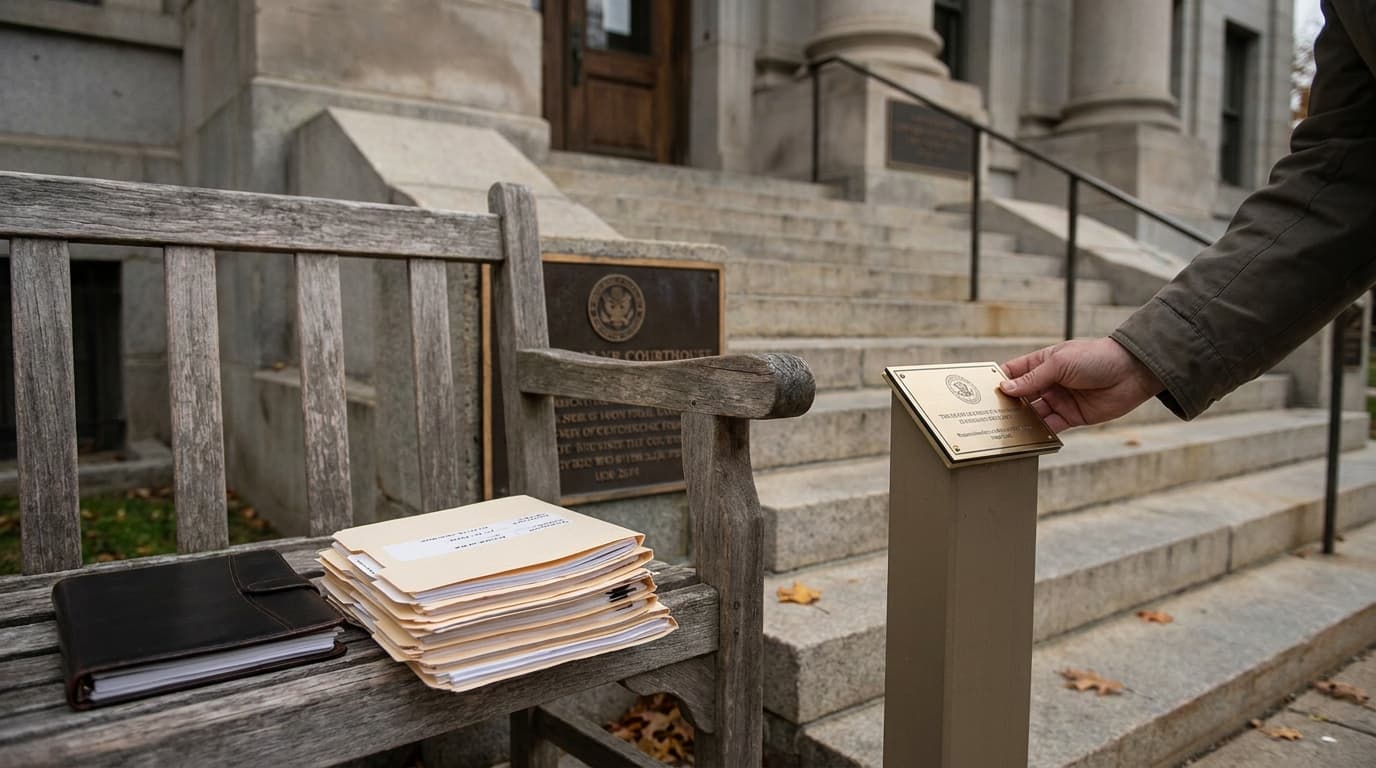
The Supreme Court told Halima Culley in May 2024 that the Constitution did not guarantee her a prompt hearing to recover her son's car. Eighteen months later, state legislatures are writing that hearing into law anyway.
In Culley v. Marshall, 601 U.S. ___ (2024), the Court ruled 6-3 that the Due Process Clause requires only a "timely" final forfeiture hearing, not a separate preliminary hearing after police seize property. The decision, written by Justice Brett Kavanaugh, set a low federal floor for civil asset forfeiture. It left every protection above that floor to Congress and the states.
The states are responding. Washington's HB 1440 takes effect January 1, 2026. Colorado's HB24-1023 takes effect August 12, 2026. Lawmakers in Oklahoma, New York, and Minnesota have introduced bills that go further. The result is a patchwork of post-Culley reforms that, in several states, give owners far more rights than the Constitution requires.
This article explains what Culley held, why the ruling shifted reform to the statehouses, and what the new state laws mean for people whose cars, cash, or homes have been seized.
What the Supreme Court Actually Decided
Halima Culley loaned her car to her son. Police in Satsuma, Alabama, stopped him in February 2019 and arrested him on marijuana charges. Officers seized the car under Alabama's civil forfeiture statute. Lena Sutton's case followed a similar pattern in a different Alabama county. Both women sued, arguing the Fourteenth Amendment entitled them to a prompt post-seizure hearing where they could challenge the seizure before the state's final forfeiture trial months later.
The Supreme Court disagreed. Justice Kavanaugh's majority opinion held that due process in civil forfeiture requires one hearing, and that hearing must be timely. Timeliness is measured under the four-factor test from Barker v. Wingo, the Court's speedy-trial framework: length of delay, reason for the delay, whether the owner asserted her rights, and prejudice to the owner. The slip opinion is available from the Court at supremecourt.gov.
Justice Neil Gorsuch, joined by Justice Clarence Thomas, concurred. He flagged broader historical and constitutional doubts about modern civil forfeiture and signaled openness to revisiting the doctrine in a future case. Justice Sonia Sotomayor, joined by Justices Elena Kagan and Ketanji Brown Jackson, dissented. She warned that without a prompt hearing, innocent owners would lose vehicles and cash for weeks or months while a final hearing was scheduled. SCOTUSblog hosts the full docket and briefing.
The Institute for Justice, which filed an amicus brief supporting Culley, framed the ruling bluntly. Federal litigation was no longer the route to meaningful reform. State legislatures were. The group's statement on the decision laid out the new strategy.
Why Reform Moved to the States
Culley set a constitutional minimum, not a ceiling. States have always been free to raise the burden of proof, shorten the hearing window, require a criminal conviction before forfeiture, or appoint counsel for indigent owners. Before the ruling, advocates pursued reform on both the federal and state fronts. After the ruling, the federal due-process front closed.
The Institute for Justice's Policing for Profit 4 report, released across 2024 and 2025, gave 35 states and the federal government a grade of D+ or worse on civil forfeiture laws. Massachusetts received the only F. Maine and New Mexico, both of which replaced civil forfeiture with criminal forfeiture, received the only A grades. The full scorecard and underlying methodology are public.
That scorecard set the agenda for 2025 and 2026. Three state packages stand out.
Case Study #1: Washington HB 1440
Washington's reform, signed in 2025 and effective January 1, 2026, rewrites the state's patchwork of forfeiture provisions into a single statute. The bill text and committee analysis are available through the Washington Legislature.
HB 1440 does four things that matter to defense lawyers and owners:
-
Raises the burden of proof to "clear, cogent, and convincing evidence." Parts of Washington's prior code allowed seizures on a lower preponderance standard.
-
Extends hearing-request deadlines to 60 days for personal property and 120 days for real property, giving owners more time to file claims and locate counsel.
-
Applies the Servicemembers Civil Relief Act to forfeiture proceedings, automatically staying actions against deployed military members.
-
Creates statewide reporting through the Washington State Patrol, which will publish aggregate seizure data.
The Municipal Research and Services Center published a plain-language summary for local agencies. Sen. Bob Hasegawa, a longtime sponsor of forfeiture reform, described the bill's purpose in a statement at signing.
Washington stopped short of requiring a criminal conviction before forfeiture. The legislature left that fight for another session.
Case Study #2: Colorado HB24-1023
Colorado went further. HB24-1023, signed in 2024 and effective August 12, 2026, gives owners exactly the kind of preliminary hearing the Supreme Court ruled was not constitutionally required. The bill page is at the Colorado General Assembly.
Under the statute, any person with an interest in seized property may request a prompt post-seizure hearing within 14 days. At that hearing, a judge reviews whether the state has probable cause to hold the property and whether continued retention is reasonable. The Legislative Council Staff's fiscal note details the operative date and implementation costs.
The Colorado package also:
-
Bars final forfeiture orders without a criminal conviction, subject to narrow exceptions for owners who flee or die.
-
Allows judges to appoint counsel for indigent owners.
-
Redirects 25 percent of forfeiture proceeds into a new forfeiture defense fund, the first dedicated funding stream for indigent forfeiture defense in the country.
Colorado is the clearest test case for the post-Culley theory of reform. When the federal floor is low, states can build a much higher ceiling.
Case Study #3: Oklahoma HB 3283
Oklahoma's reform fight illustrates that civil forfeiture is not a partisan issue. Rep. Rob Hall, a Republican, introduced HB 3283 in January 2026. The bill would raise Oklahoma's burden of proof from a preponderance of the evidence to clear and convincing evidence that seized property is connected to criminal activity. Oklahoma Watch and Public Radio Tulsa have covered the bill and the political coalition behind it.
Past Oklahoma reform efforts have faced strong opposition from district attorneys and sheriffs' associations, who argue that forfeiture proceeds fund drug interdiction. The 2026 bill's fate will indicate whether the post-Culley reform wave reaches conservative-controlled legislatures.
The Equitable-Sharing Front: New York AB 1437 and the Federal FAIR Act
State reforms hit a wall when local agencies route seizures through the federal equitable-sharing program. Under that program, state and local agencies can transfer seized assets to a federal partner and receive up to 80 percent of the proceeds back, bypassing state forfeiture laws. The Department of Justice's Guide to Equitable Sharing describes how the program operates.
Two reforms target this loophole.
New York's Assembly Bill 1437, introduced in the 2025 session by Assembly Member Pamela Hunter and seven cosponsors, would largely abolish civil forfeiture in New York and bar state and local agencies from participating in federal equitable sharing for seizures involving less than $20,000 in currency. The Tenth Amendment Center published an analysis of the bill's structure.
At the federal level, Sens. Cory Booker and Rand Paul reintroduced the FAIR Act (S.263) in the 119th Congress in 2025. The bill would eliminate the statutory authority for the equitable-sharing program. Booker's press release and the bill's Congress.gov page document the proposal. The FAIR Act has not advanced, but it provides the legislative template that several states are now adapting.
What a Prompt Hearing Actually Looks Like
For criminal defense lawyers, the new statutory hearings are an early lever, often available before the state files any criminal charges.
The sequence in a Colorado-style regime works like this. Police seize the property. The owner, or any person with an interest, files a written demand for a prompt hearing within the statutory window (14 days in Colorado, 60 or 120 days in Washington). The court schedules a hearing, often within weeks. At the hearing, the state must show probable cause for the seizure and a reason to continue holding the property. The owner can present evidence, call witnesses, and cross-examine the seizing officer. If the state cannot meet its burden, the court orders the property returned.
In Washington, the higher "clear, cogent, and convincing" burden applies at the final forfeiture proceeding rather than the preliminary stage, but it still changes the calculus for prosecutors deciding whether to file a forfeiture action at all. In Colorado, the conviction prerequisite means that if the underlying criminal case ends in dismissal or acquittal, the forfeiture action ends with it.
Defense lawyers in reform states are sequencing motions to recover vehicles and cash before any criminal charge is filed. That sequence was effectively unavailable to Halima Culley in Alabama.
Counter-Arguments From Prosecutors and Police
Law enforcement groups have opposed most state reforms, including the Washington and Colorado packages. The objections fall into three categories.
First, workload. Prompt hearings within 14 or 60 days add court appearances and discovery obligations to prosecutors and seizing agencies.
Second, drug-trafficking proceeds. Sheriffs' associations argue that trafficking organizations move large amounts of cash through couriers and that conviction prerequisites let proceeds escape when the courier is uncharged or flees.
Third, funding. In many states, forfeiture proceeds fund drug task forces and equipment. Colorado's 25 percent diversion to a defense fund and Minnesota's proposed $1,500 minimum threshold cut directly into those revenue streams.
Minnesota is the next testing ground. Rep. Kelly Moller's HF75 and the related HF 3725 and SF 3419 package would impose a $1,500 minimum forfeiture threshold and replace civil forfeiture with criminal forfeiture, requiring a conviction before any final forfeiture order. The Minnesota House Session Daily has covered the bills' progress. The Minnesota Reformer reported in October 2025 that state seizures had risen, fueling the reform push.
What to Watch Next
Three threads are worth tracking through 2026.
The Minnesota package will indicate whether a conviction-required regime can pass a divided legislature. Oklahoma's HB 3283 will indicate whether the burden-of-proof reform can move in a Republican trifecta. The Institute for Justice's next scorecard update will measure how much ground the post-Culley wave actually covered.
There is also an open question at the Supreme Court. Justice Gorsuch's concurrence in Culley invited a future challenge under the Excessive Fines Clause of the Eighth Amendment or on historical grounds reaching back to early American forfeiture practice. The Constitution Annotated maintained by the Library of Congress tracks how Culley fits with earlier due-process precedents like Mathews v. Eldridge and United States v. $8,850. Reason magazine's contemporaneous coverage noted that several justices appeared to be inviting a return engagement.
For now, the practical answer for people whose property has been seized is jurisdictional. In Colorado and Washington, the new statutes give owners tools to recover property quickly. In Alabama, where Halima Culley's case began, the federal floor set by Culley remains the ceiling.
Related reading
Sources
Note: This article contains AI-assisted content and has been reviewed by our editorial team.
IMPORTANT NOTICE: GavelDaily.com is an advertising and information service, not a law firm. Submitting this form does not create an attorney-client relationship. The information you provide will be shared with licensed criminal defense attorneys in your area who may contact you about your inquiry. All submissions are treated as confidential by our service, but attorney-client privilege does not attach until you formally retain an attorney. Any attorney you connect with through this service is independently responsible for their legal advice and representation. Free consultations are subject to individual attorney availability. If you are facing an immediate legal emergency, contact your local public defender's office or call 911.