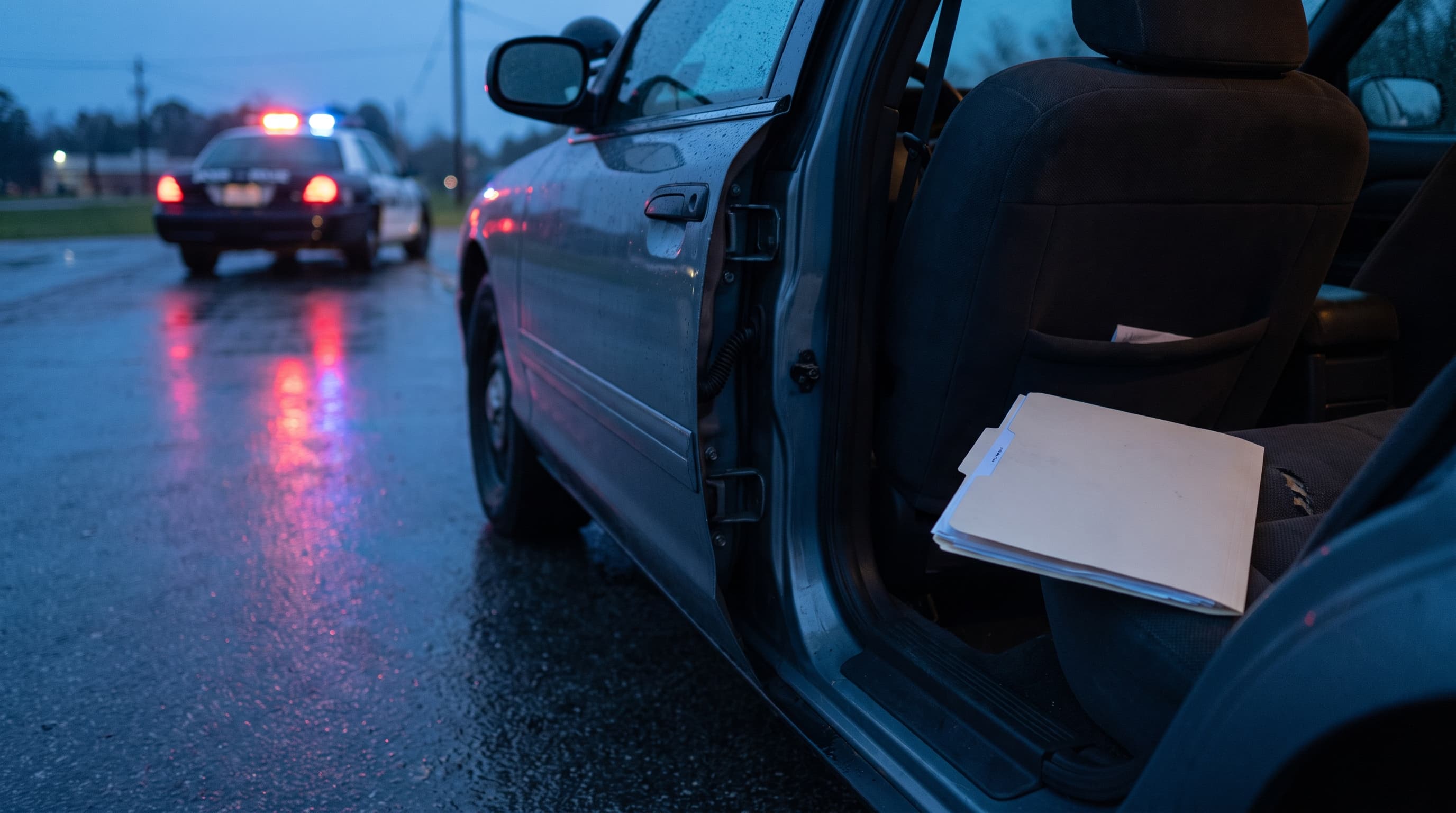
If you have a DUI on your record, you may be barred from owning a gun under federal law and not know it. That is what happened to Edward Williams, a Pennsylvania man who learned around 2015 that a 2005 DUI conviction had cost him his gun rights, roughly a decade after the fact (Reason, RedState). On Oct. 13, 2026, the full U.S. Court of Appeals for the Third Circuit ruled 8-6 that the federal ban could not constitutionally be applied to him. Here is how gun rights after DUI convictions work, what the ruling changed, and what it did not.
Can a DUI take away your gun rights?
Yes, in some cases. A DUI can trigger the federal gun ban if the offense carried a maximum possible sentence of more than two years, even if your state calls it a misdemeanor and even if you never served a day in jail.
The federal law is 18 U.S.C. § 922(g)(1). It makes it unlawful for anyone "convicted in any court of, a crime punishable by imprisonment for a term exceeding one year" to possess a firearm. People often call it the "felon in possession" ban, but the statute does not use your state's felony label. It looks at the maximum punishment.
There is one carve-out. Under 18 U.S.C. § 921(a)(20)(B), the ban does not reach "any State offense classified by the laws of the State as a misdemeanor and punishable by a term of imprisonment of two years or less." So a state misdemeanor DUI with a maximum of two years or less does not trigger the ban. A state misdemeanor DUI with a maximum over two years does.
Does the sentence you actually received matter?
No. What counts is the maximum sentence the offense allowed, not the sentence the judge imposed.
Pennsylvania shows how this works. Under 18 Pa.C.S. § 1104, misdemeanor maximums are five years for a first-degree misdemeanor (M1), two years for a second-degree misdemeanor (M2) and one year for a third-degree misdemeanor (M3). An M2 or M3 falls inside the federal two-year exclusion. An M1 does not.
Pennsylvania's DUI grading statute, 75 Pa.C.S. § 3803, treats a general-impairment DUI with no more than one prior offense as a misdemeanor punishable by up to six months, and the grade rises with prior offenses, up to a third-degree felony.
Williams's case followed that escalation. According to Reason, his first DUI was in 2000 in State College. His second came in 2005 in Philadelphia, with a blood alcohol content of 0.223%. It was graded as a first-degree misdemeanor carrying a maximum of five years. Williams got no jail time; RedState and Hoodline report a sentence of 90 days to two years served at home. Because the maximum was five years, federal law treated him as permanently disqualified from possessing firearms.
Every state grades DUIs differently. If you have a repeat or high-BAC DUI, find out its grade and maximum sentence under your state's law. That number decides whether the federal ban applies.
What did the Third Circuit decide in Williams v. Attorney General?
The case is Edward Williams v. Attorney General United States of America, et al., No. 24-1091, a precedential en banc opinion filed Oct. 13, 2026 (GovInfo). It is a civil case: Williams sued the federal government, with backing from the Firearms Policy Coalition, an advocacy group. Joshua Prince represented him. According to RedState, he filed suit in 2017.

The full court voted 8-6 that § 922(g)(1) is unconstitutional as applied to Williams. Judge Paul Matey wrote the opinion of the court, joined by Judges Hardiman, Bibas, Porter, Phipps, Bove and Mascott, according to USA Carry and Bloomberg Law. Chief Judge Michael Chagares concurred in the judgment, making eight votes for Williams. Hoodline reports that all eight judges in the majority were appointed by Republican presidents and all six who did not join were appointed by Democratic presidents.
As reported by the outlets covering the decision:
-
Matey's opinion opens: "The Second Amendment is a primary protection against tyranny, a strong bulwark securing American liberty, and an indispensable means of defending the public good" (quoted by RedState).
-
The court said Williams "has done nothing violent, let alone dangerous, for over twenty years" (quoted by Reason).
-
The court found "no history that supports disarming irresponsible people" (reported by Bloomberg Law and Prince Law Offices, the firm of Williams's counsel).
The Justice Department defended the ban by pointing to historical "habitual drunkard" laws. According to Bearing Arms, the court found those laws restricted gun rights only while a person was confined, not for life. Prince Law reports that the ruling affirmed the district court's summary judgment for Williams.
Where is the line between a DUI and a disqualifying conviction?
The same day, the same en banc court decided United States v. Bost, No. 24-1719, and went the other way. James Bost's prior conviction came from a Pennsylvania guilty plea to terroristic threats, and the court upheld the gun ban for him (Bloomberg Law). Judge Stephanos Bibas wrote: "Those who pose a risk of physical violence from misusing guns can be disarmed before that risk becomes a reality" (quoted by Bloomberg Law). Judge Phipps, joined by Judge Bove, dissented, and Judge Mascott wrote separately.
Taken together, the two rulings draw a line. In the Third Circuit, convictions involving violence or threats still support disarmament. A nonviolent conviction such as Williams's DUI does not automatically do so. Brownstone Law describes the decisions the same way. This builds on the Third Circuit's earlier ruling in Range v. Attorney General, which restored gun rights to a Pennsylvania man convicted of food-stamp fraud (Reason).
What did the dissent and the concurrence say?
GovInfo lists separate opinions by Chief Judge Chagares, Judge Arianna Freeman and Judge Patty Shwartz. In a dissent reported by Hoodline, Judge Freeman argued that offenses like drunk driving can "show a credible threat to others' physical safety."
The concurrence matters for anyone thinking about bringing a similar case. According to USA Carry, Chief Judge Chagares would require future challengers to first use the federal rights-restoration process under 18 U.S.C. § 925(c) before suing. He excused Williams only because the case had already been in court for nine years.
Does the Williams ruling restore gun rights for everyone with a DUI?
No. Two limits matter.
Geography. The Third Circuit covers Pennsylvania, New Jersey, Delaware and the U.S. Virgin Islands (28 U.S.C. § 41). The ruling does not bind federal courts anywhere else.
As-applied, not facial. The court held the ban unconstitutional as applied to Williams and his record. It did not strike down § 922(g)(1). If your DUI conviction carried a maximum over two years, you remain covered by the federal ban unless a court or the Justice Department grants you relief or one of the statutory exceptions applies. Possessing a firearm while covered by § 922(g)(1) is a federal crime. Do not treat this ruling as permission to buy or carry a gun.
How can you get your gun rights back after a DUI?
There are three main routes. Talk with a lawyer about which, if any, fits your record.

-
Expungement, set-aside, pardon or restoration of civil rights. Under § 921(a)(20), a conviction that has been expunged or set aside, or for which you were pardoned or had civil rights restored, does not count for the federal ban, unless the pardon, expungement or restoration expressly says you may not possess firearms. Eligibility depends on your state's law.
-
Federal relief under § 925(c). The Justice Department published a final rule on Aug. 20, 2026 reviving the process for relief from federal firearms disabilities. According to NRA-ILA, the process accepts 5,000 general applications starting Nov. 4, 2026, and 500 more starting Jan. 4, 2027. Applicants must show they are not likely to act in a manner dangerous to public safety.
-
An as-applied court challenge. Williams won this way, but it took years. Whether the option exists depends heavily on where you live, and if Chief Judge Chagares's view gains ground, courts may expect you to try § 925(c) first.
Will the Supreme Court decide whether a DUI can bar gun ownership?
Possibly, but nothing is scheduled. Federal appeals courts are divided. In United States v. Duarte (May 9, 2025), the en banc Ninth Circuit held § 922(g)(1) "not unconstitutional as applied to non-violent felons," joining the Fourth, Eighth, Tenth and Eleventh Circuits (Federal Defenders). Reason counts three circuits that allow as-applied challenges and six that block them. The Sixth Circuit allows challenges based on dangerousness, and the Fifth Circuit struck the ban as applied to a person whose felony was simple drug possession in United States v. Hembree.
On Oct. 5, 2026, the Supreme Court denied the government's petition in Hembree (docket No. 25-1219). The Duke Center for Firearms Law reported about 32 § 922(g)(1) petitions set for the Court's Sept. 28 conference, none granted as of its Aug. 24 post. Hoodline quotes legal observers calling the Williams split a "strong candidate for future U.S. Supreme Court review."
What to do if you were just charged with a repeat or high-BAC DUI
The gun consequence is decided by the offense you are convicted of, so it is decided at the plea stage. Before you accept any plea, ask your lawyer:
-
What grade is the offense I am pleading to, and what is its maximum possible sentence?
-
Is that maximum more than two years? If so, the federal ban under § 922(g)(1) will likely apply.
-
Is a lower-graded offense available, or a diversion or first-offender program that avoids a conviction?
-
Will I be eligible for expungement or sealing later, and would that restore my federal gun rights?
Williams went a decade without knowing his status. A few questions before your plea can tell you where you stand from day one.
Related reading
-
What Colorado's Fentanyl Ballot Measure Would Change for a Possession Charge
-
What Happens When You Can Never Pay Back Federal Restitution
-
What Happens at Arraignment After a Misdemeanor Assault Arrest
-
Facing Federal Sentencing? The Supreme Court Is Deciding Who Interprets the Guidelines
Sources
-
GovInfo: 24-1091, Edward Williams v. Attorney General United States of America, et al.
-
Reason: The 3rd Circuit upholds Pennsylvania man's gun rights after DUI conviction in 2005
-
Bloomberg Law: Felon Disarmament Law Gets Split Decisions at Appeals Court
-
USA Carry: Two DUIs From the Early 2000s, a Lifetime Gun Ban He Never Knew He Had
-
RedState: Federal Court Draws a Line on Gun Rights, and DOJ May Not Like Where It Lands
-
Bearing Arms: After Upholding One Felon Gun Ban, Third Circuit Strikes Down Another
-
Firearms Policy Coalition: Third Circuit strikes down federal lifetime gun ban over DUI
-
Brownstone Law: Third Circuit Limits Federal Gun Ban for Nonviolent Offenders
-
Federal Defenders: En Banc Ninth Circuit Rejects As Applied Challenge to 922(g)(1)
-
NRA-ILA: DOJ relaunches federal firearms rights restoration with new final rule
Note: This article contains AI-assisted content and has been reviewed by our editorial team.
IMPORTANT NOTICE: GavelDaily.com is an advertising and information service, not a law firm. Submitting this form does not create an attorney-client relationship. The information you provide will be shared with licensed criminal defense attorneys in your area who may contact you about your inquiry. All submissions are treated as confidential by our service, but attorney-client privilege does not attach until you formally retain an attorney. Any attorney you connect with through this service is independently responsible for their legal advice and representation. Free consultations are subject to individual attorney availability. If you are facing an immediate legal emergency, contact your local public defender's office or call 911.